If you are planning to spend real money on a front lip, hood, or spoiler, understanding the difference will protect your wallet and your build.
This guide breaks down the manufacturing process, the performance characteristics, and the real-world trade-offs of dry carbon versus wet carbon fiber. By the end, you will know which material belongs on your car and which belongs on a showroom wall.
What Is Wet Carbon Fiber?
Wet carbon fiber, also called wet layup or hand layup, is the traditional method. A technician places woven carbon fiber sheets into a mold and brushes or sprays liquid resin over them by hand. The resin saturates the fibers, and the part cures at room temperature or in a low-temperature oven.
The Good
Wet layup is inexpensive, requires minimal equipment, and works well for large, non-structural parts. Most mass-produced carbon fiber engine-bay covers, interior trim pieces, and budget aero kits are wet carbon. The process is forgiving, which is why so many aftermarket brands use it.
The Bad
The resin-to-fiber ratio in wet layup is inconsistent. Excess resin adds weight without adding strength. A wet carbon hood can weigh nearly as much as the aluminum or steel hood it replaces, defeating the primary purpose of upgrading to carbon fiber. Worse, the room-temperature cure does not fully cross-link the resin, leaving the part more susceptible to UV yellowing, resin cracking, and moisture absorption over time.
The Verdict on Wet Carbon
Wet carbon is acceptable for cosmetic pieces—mirror caps, interior trim, or show-car splitters that never see highway speeds. It is not the right choice for functional aero, structural panels, or track-day hardware.
What Is Dry Carbon Fiber?
Dry carbon fiber uses pre-impregnated (pre-preg) sheets of carbon fiber that are already saturated with resin in a controlled factory environment. The pre-preg sheets are laid into a mold, vacuum-bagged to remove trapped air, and cured in an autoclave under high heat and pressure.
The Good
Autoclave curing produces a part with a precise resin-to-fiber ratio—typically 30–35 % resin by weight, compared to 50–60 % in wet layup. That means a dry carbon hood can weigh 40–60 % less than its wet carbon equivalent while being significantly stronger and stiffer. The high-pressure cure also eliminates voids, increases heat resistance, and creates a surface finish that requires minimal sanding or filler before clearcoat.
The Bad
Dry carbon is more expensive. The raw pre-preg material costs more than loose fabric and liquid resin. The autoclave equipment is industrial-scale. The labor is skilled. A dry carbon front lip can cost 2–3x more than a wet carbon equivalent. For some buyers, that premium is not justified. For anyone tracking their car or chasing lap times, it is non-negotiable.
The Verdict on Dry Carbon
Dry carbon is the correct choice for hoods, trunks, spoilers, splitters, and any part where weight, strength, and heat resistance matter. It is what Formula 1, GT3 racing, and aerospace use for a reason.
The Visual Test: Can You Tell the Difference?
In a glossy Instagram photo, wet and dry carbon can look identical. In person, the differences are obvious to a trained eye:
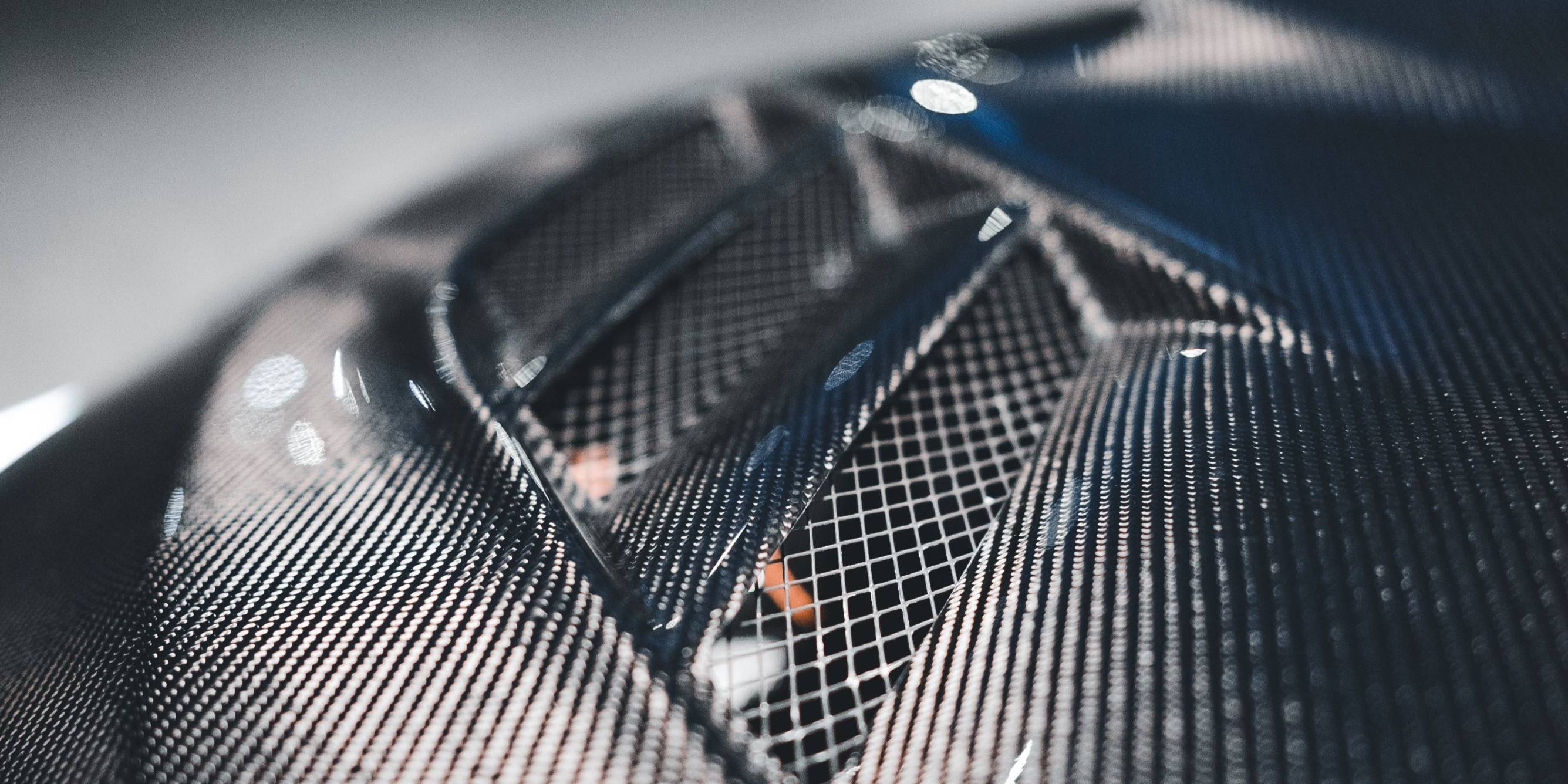
- Weave clarity: Dry carbon has a deep, three-dimensional weave where individual fiber bundles catch light. Wet carbon often looks flatter because the excess resin pools on the surface.
- Weight: Pick up a dry carbon mirror cap and a wet carbon mirror cap. The dry part will feel surprisingly light—almost like plastic. The wet part feels dense.
- Backside inspection: Flip a hood or trunk over. Dry carbon parts have a clean, structured inner surface with visible weave and minimal resin drip. Wet carbon parts often have rough, resin-heavy backsides with visible brush marks or filler.
Common Myths
Myth: "All carbon fiber is basically the same." False. The manufacturing method determines resin content, void presence, heat tolerance, and weight. A wet carbon hood and a dry carbon hood are as different as cast iron and forged aluminum.
Myth: "Dry carbon is too brittle for street use." False. Dry carbon is stronger and stiffer per kilogram than wet carbon. The "brittle" reputation comes from cheap knockoff parts with poor resin systems, not from properly engineered dry carbon.
Myth: "Wet carbon is fine if you just want the look." Partially true, but with a caveat. Wet carbon yellows faster, weighs more, and is more likely to crack from vibration or minor impacts. If the "look" is your priority, budget for a quality UV clearcoat and plan to replace the part in 3–4 years.
How to Choose for Your Build
Ask yourself three questions before you buy:
- Is this part functional or cosmetic? Functional aero (splitter, diffuser, hood) demands dry carbon. Cosmetic trim (interior panels, engine cover) can tolerate wet carbon.
- Will this car see track days? Track heat, sustained high speeds, and vibration punish wet carbon. Buy dry.
- What is my replacement horizon? If you plan to keep the car for five years or more, the durability of dry carbon pays for itself. If you flip builds every 18 months, wet carbon is a defensible budget choice.
Conclusion
Dry carbon fiber and wet carbon fiber serve different masters. Wet carbon democratizes the aesthetic of motorsport. Dry carbon delivers the performance. At KZT Carbon, we build exclusively with pre-preg dry carbon and autoclave curing because our customers install our parts on cars that are driven hard, not parked under showroom lights.
If you are shopping for a carbon fiber upgrade and the seller cannot tell you whether their part is wet or dry layup, that is your answer. Move on. Your build deserves better.
Ready to upgrade? Browse our full dry carbon collection by vehicle.